Four originals.
Each product grew out of client work and research. None is for sale at scale. Each has its own design system, its own roadmap, and its own audience. When a product graduates, it gets its own site.
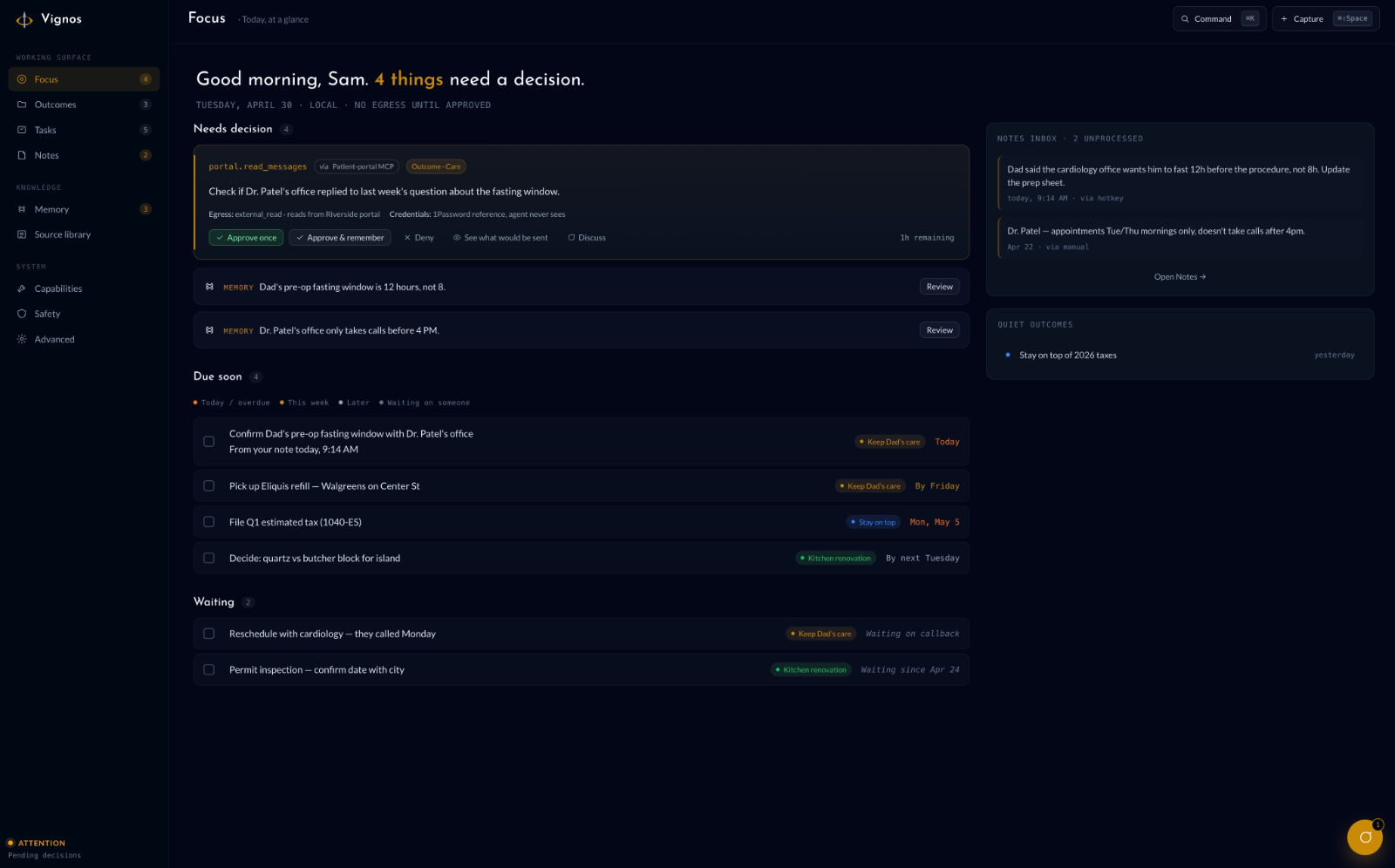
Vignos.
Foundational agent. Local inference, memory, and security in one package. Designed to sit on hardware the customer owns. Memory you own. The substrate the practice will run on as it matures.
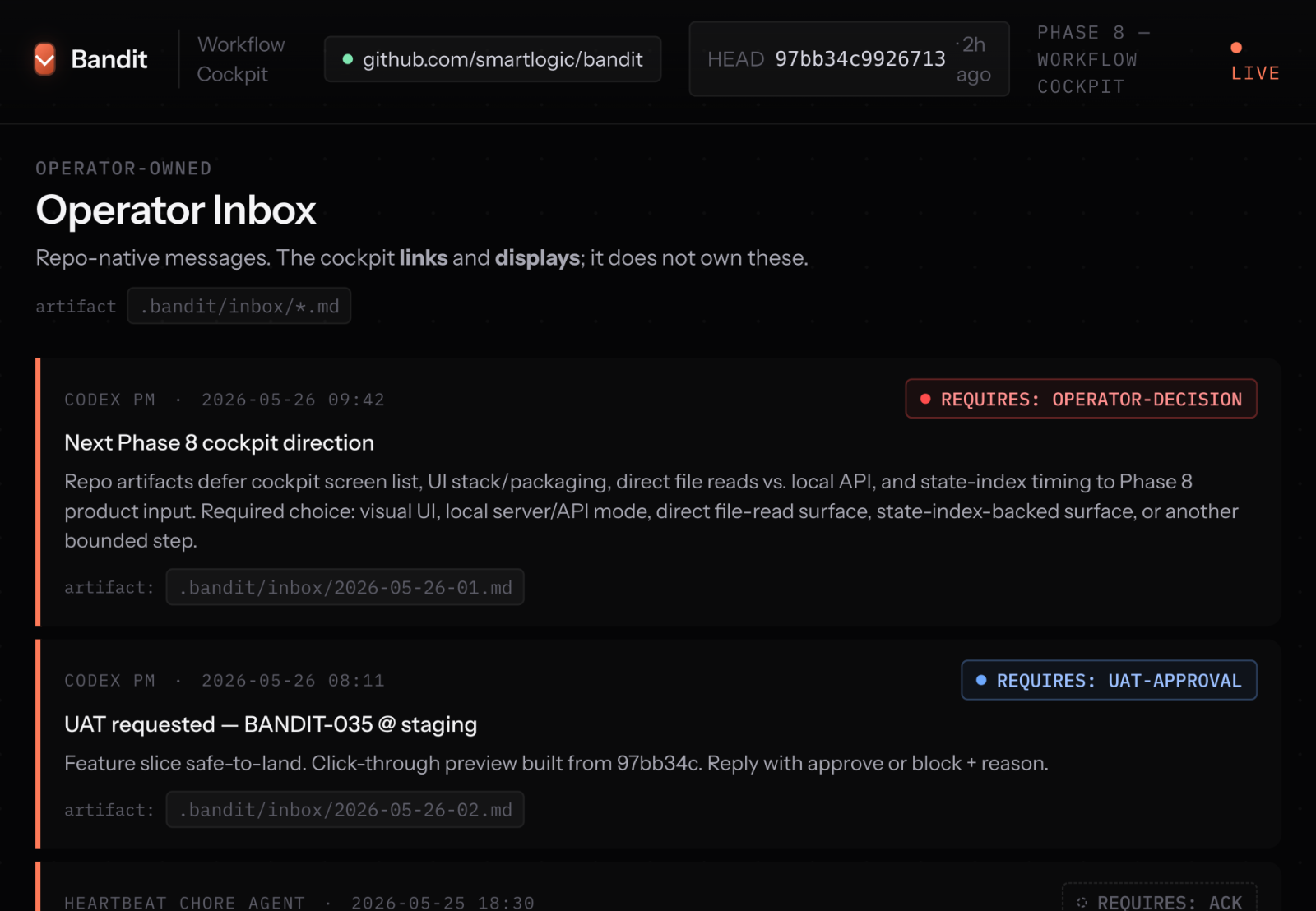
Bandit.
Repo-native trust layer for agentic software delivery. Sits between the agent and the code, with mechanical enforcement at every gate. The bet: AI-authored code is fine if the gates are honest.
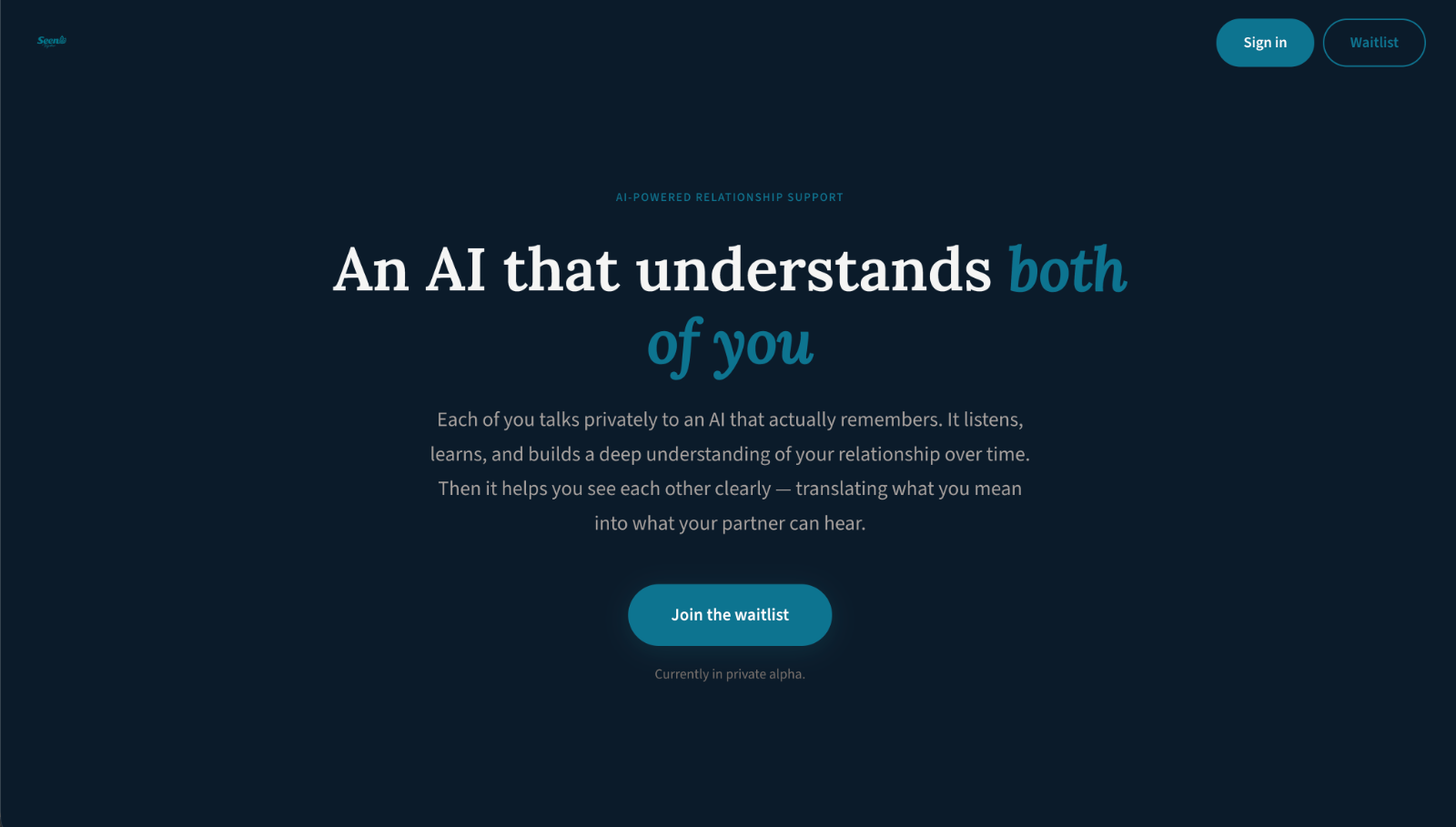
Seen Together.
Couples counselling AI for partners navigating hard conversations, with a therapist in the loop. The AI is not the therapist — it is the scaffolding that makes the hard conversation possible between the people who actually need to have it.
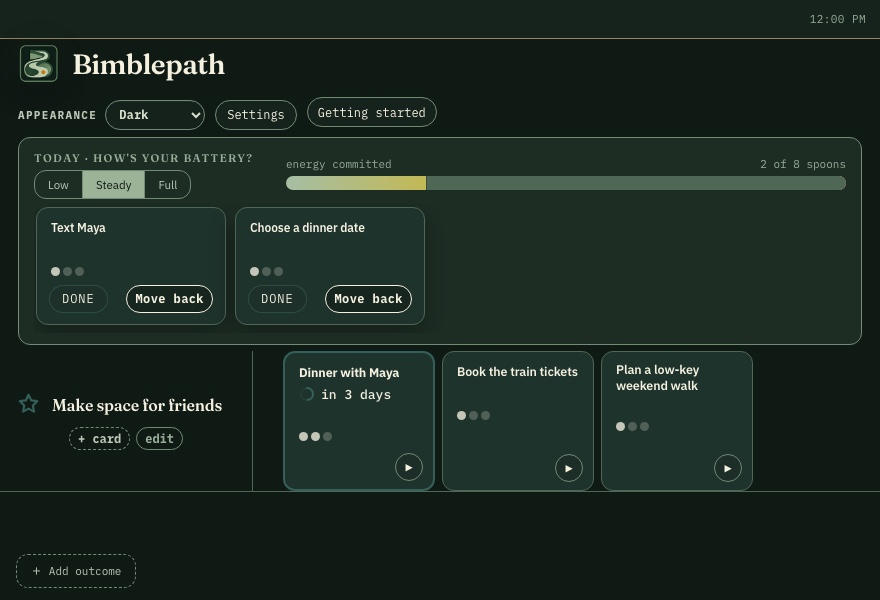
Bimblepath.
Mac planning for variable-energy days. Most planners assume every day has the same battery. Bimblepath doesn't — outcomes hold your actions in a useful order, Today only takes what fits the capacity you actually have, and commitments approach on the horizon with enough warning to prepare. Runs on your Mac, one-time purchase, no subscription.
Not a startup. Not a shop.
The product lab is the third leg of SmartLogic Strategy, alongside the practice and the research lab. It is small and deliberate. A product gets built when an idea has been tested twice — once in research, once in a practice engagement — and is still alive.
A product gets its own marketing site when it has paying customers. Until then, it lives on this page with a status badge and a one-paragraph description. If a product is in alpha, it is in alpha. We will not pretend otherwise.
Curious about one of these?
Pilots and partnerships are case-by-case. Tell us which product you're interested in and what you'd want from it.